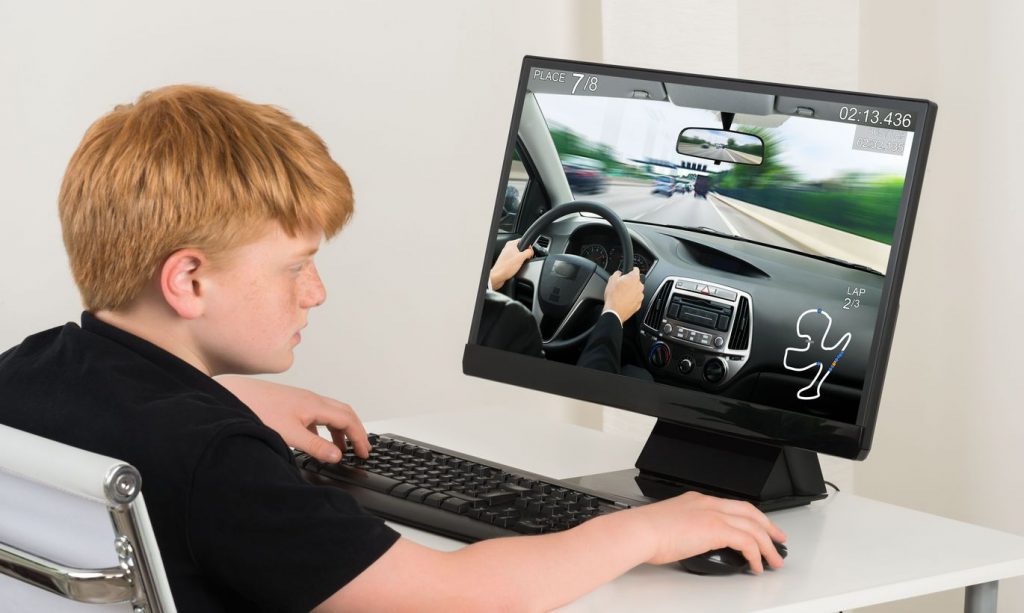
Every child loves games. Someone likes active games with peers on the street, and someone prefers to play at home without an extra company, someone likes to collect puzzles, and someone likes to shoot at monsters and drive cars. If you are a tomboy from the last, then specifically for them there is an excellent site ‘gonki.su’, which contains the best race games. And about the most unusual will be discussed in this article.
Racing in the desert of Mars
This is a very amusing space game in which the child will not have to chase with other typewriters. Its four-wheeled transport will easily plow the expanses of the red planet, regardless of the most terrible weather conditions – cold, dust storms. Even with zero visibility, you will need to perform tasks for a while. Two game modes will not let you get bored. In the first, you can freely travel and carefully consider every corner of the planet, preparing to be populated by earthlings, and in the second it will be necessary to collect 10 transmitters as soon as possible. This is a great game for preschool kids.
Accidents on the machines
It is a very fast game, requiring concentration of attention, good reaction and ability to make quick decisions. The road survey is small, which greatly increases the chances of damaging the car and smashing a foreign car whose speed is much lower than yours. On the way there are bonuses in the form of nitro speed and time, plus for every five thousand yards passed, 30 seconds of bonus time are given. This is very addictive game.
18-wheeled truck
This is a very addictive game, the continuation of the famous and no less addictive game. It is necessary to park the truck, having previously chosen the color and picture of the huge car. The mini-map opened by the M key will be shown, in the game the red arrow will tell you which direction to move. To break a car should not be, it is by no means immortal. I’ll have to do everything carefully, so as not to touch moving cars and parked trucks. Management requires accuracy. This game is a good one for diligent guys.